
Margin, not revenue, decides whether your restaurant survives, pays you a real salary, and eventually funds a second location. Plenty of busy dining rooms lose money every month. This guide explains what a healthy profit margin looks like for a small restaurant in 2026, how to calculate the handful of numbers that drive it, and which levers actually move it.
What profit margin actually means
Net profit margin is what is left after every expense, divided by sales: net margin = (total revenue − total costs) ÷ total revenue. Say your restaurant brings in $60,000 in a month and spends $57,000 on food, labor, rent, utilities, insurance, software, and fees. You netted $3,000 — a 5% margin.
Two clarifications prevent most of the confusion. Gross margin — revenue minus the cost of food and beverage only — always looks flattering; a restaurant with a 70% gross margin can still lose money once labor and rent land. And if you are not paying yourself a market-rate salary for the hours you actually work, your “profit” is partly unpaid wages. Put your own pay in the labor line before you judge the number.
What is a good profit margin for a restaurant in 2026?
Commonly cited ranges put full-service restaurants in the low single digits — roughly 3–5% net — with quick-service concepts often a few points higher, and pizza, coffee, and other beverage-heavy concepts higher still because their ingredient costs run lower. Treat those numbers as loose context, not a scorecard. Industry averages blend wildly different rents, menus, and markets, and none of them know your lease.
A more useful frame for a small independent restaurant: consistently below break-even calls for triage, low single digits is normal but fragile, mid-to-high single digits is genuinely solid, and sustained double digits means you have built an unusually efficient operation. What matters is that you calculate your own margin monthly and watch the trend, not the benchmark.
The five numbers that drive your margin
1. Food cost percentage
Food cost percentage is the cost of ingredients used divided by food sales. If a dish sells for $18 and the plate costs $5.40 in ingredients, that item runs a 30% food cost. For the whole restaurant, use inventory counts: beginning inventory plus purchases minus ending inventory equals what you actually used. The gap between theoretical food cost (what your recipes say you should have used) and actual food cost (what inventory says you did) is waste, overportioning, and theft — usually the cheapest margin you will ever recover.
2. Labor cost percentage
Total labor — wages, payroll taxes, benefits, and your own salary — divided by revenue. Labor is harder to trim than food cost without hurting service, so the win is scheduling to demand: build each week's schedule from your actual hourly sales pattern instead of copying last week's grid.
3. Prime cost
Prime cost is food cost plus labor cost — the two expenses you can influence every single week. A widely used rule of thumb keeps prime cost at or below roughly 60–65% of sales for a full-service restaurant; above that, rent and overhead usually consume whatever remains. If you track only one number weekly, track this one.
4. Occupancy and other fixed costs
Rent, property costs, insurance, loan payments. You cannot change these weekly, which is exactly why the standard advice is to keep occupancy near or under 10% of sales when you negotiate the lease. If rent is heavy, your realistic options are growing revenue or renegotiating at renewal — and that conversation goes better when you start preparing for it a year early.
5. Channel mix: where your orders come from
An $18 order is not worth $18 from every channel. Third-party delivery marketplaces publish commission tiers that commonly run from around 15% up to 30% of each order — money that comes straight out of margin on food you still had to buy, cook, and package. The same order placed on your own website costs a fraction of that to process, which is why direct ordering versus delivery apps is fundamentally a margin question, not a marketing one. Shifting even part of your takeout and delivery mix to a direct channel — the problem tools like Dinevate exist to solve — improves margin without touching your menu, your staffing, or your prices. Practical tactics are covered in how to get more direct orders.
A worked example: 3,500 orders at an $18 ticket
Say your restaurant serves 3,500 orders in a month at an $18 average ticket — $63,000 in revenue. A plausible month might look like this:
- Food cost at 31%: $19,530
- Labor at 33%, including your salary: $20,790 — prime cost lands at 64%
- Occupancy at 9%: $5,670
- Everything else at 18% — utilities, insurance, supplies, repairs, card processing, software: $11,340
- Net profit: $5,670, a 9% margin
Now stress it. Food inflation adds two points to your cost of goods and you do not reprice: margin falls to 7%. A quarter of your orders migrate to a marketplace charging a 25% commission: several more points evaporate. Thin-margin operators obsess over percentages because at a 5% margin, one careless decision erases the month. Repricing discipline is the counterweight — see pricing tactics for 2026 inflation for how to raise prices without losing regulars.
How to build a realistic financial projection
- Project revenue from capacity, not optimism. Seats × turns per service × average ticket × days open, then discount for slow days and seasonality. For takeout-heavy concepts, project orders per daypart instead of table turns.
- Build costs bottom-up. Cost your actual recipes for food cost, draft real schedules at real wages for labor, and use your actual lease — not percentages borrowed from an article, including this one.
- Include the forgettables. Card processing, repairs and maintenance, linen, pest control, waste hauling, software subscriptions, permits, and a contingency line. These quietly absorb several points of revenue.
- Stress test it. Rerun the model with sales 15% lower and food costs two points higher. If the stressed version cannot cover debt payments and your salary, fix the plan before you sign anything.
How do you know your restaurant is profitable enough to expand?
Revenue growth alone is a bad expansion signal. Before committing to a second location, most operators want to see four things:
- Consistent unit-level profit. The current restaurant produces a solid margin month after month, including your salary, for at least a year.
- Owner-independent operations. The numbers hold when you take two weeks off. If profit depends on your presence, expansion splits you in half instead of multiplying the business.
- Documented systems. Recipes, training, ordering, and opening checklists written down well enough that a new team can reproduce your quality without you in the room.
- A cash cushion. Enough reserve to carry the second location through its ramp-up months without starving the first.
Expansion multiplies whatever you already are. A profitable, systematized restaurant becomes two of the same; a fragile one becomes two fragile ones sharing a bank account.
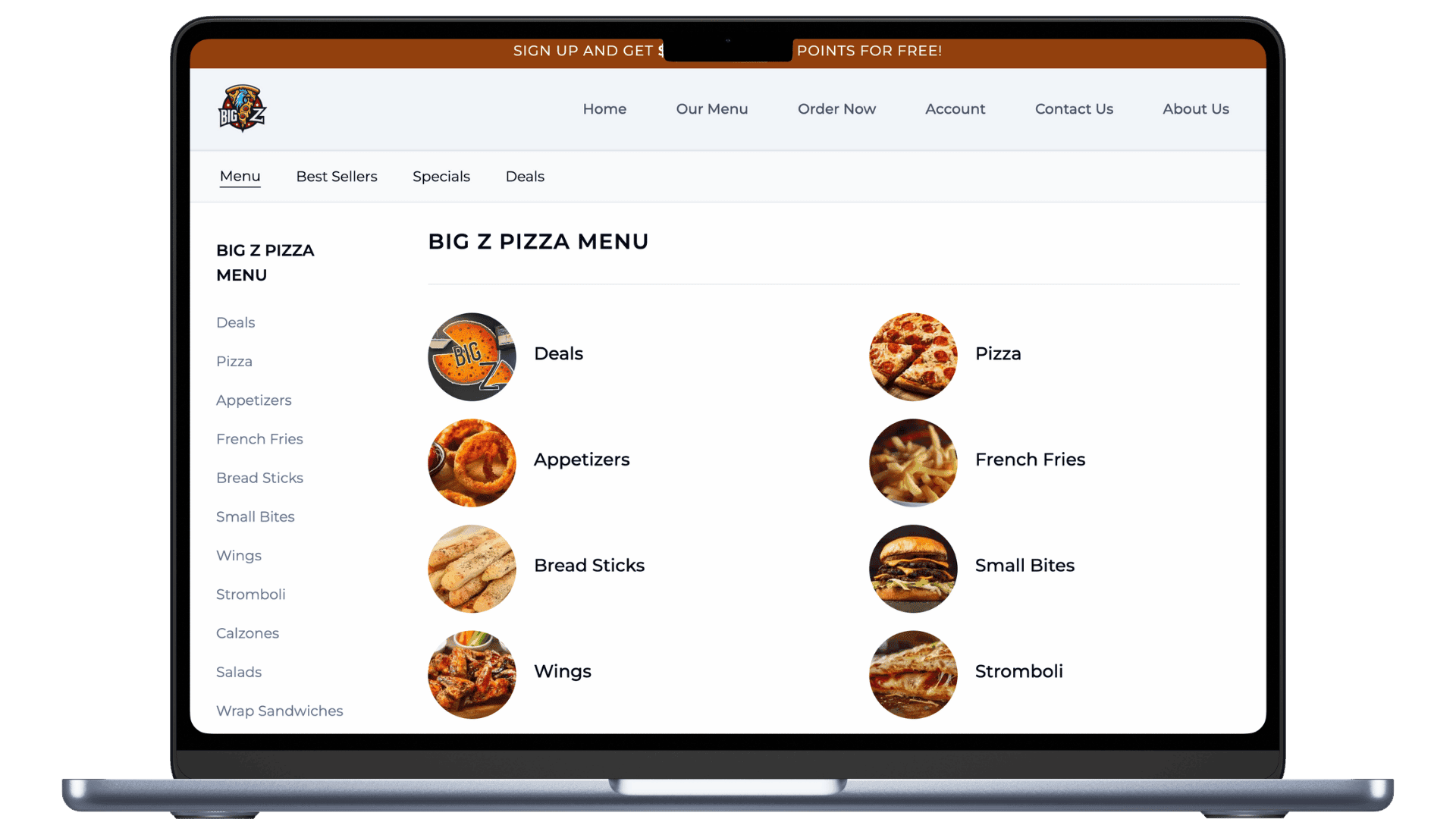
Modern online ordering system that makes it easy for customers to order from your restaurant
Frequently Asked Questions
What is the average restaurant profit margin in 2026?+
Commonly cited figures put full-service restaurants around 3–5% net margin, with quick-service and beverage-heavy concepts running higher. Treat those as rough context rather than targets, because averages blend very different rents, menus, and markets. The number that matters is your own margin, calculated monthly from your actual books.
What food cost percentage should a small restaurant aim for?+
A commonly cited range for full-service menus is roughly 28–35%, though the right target depends on your concept — pizza typically runs lower, steak-heavy menus higher. The more actionable habit is comparing theoretical food cost from your recipes against actual food cost from inventory counts. Closing that gap recovers margin without changing a single menu price.
What is prime cost and why does it matter so much?+
Prime cost is food cost plus total labor cost, expressed as a percentage of sales. It matters because these are the only two large expenses you can influence weekly, and a common rule of thumb keeps them at or below roughly 60–65% of sales. Track prime cost every week and most financial problems become visible while they are still cheap to fix.
What is the fastest way to improve a restaurant's profit margin?+
Start with the leaks that require no new customers: close the gap between theoretical and actual food cost, schedule labor to your real hourly sales curve, and shift delivery orders from commission-charging marketplaces to your own direct ordering channel. Each of these moves margin within weeks without changing your menu or your prices.