Guests do not experience your restaurant as one wait. They experience five: the wait to be greeted, to be seated, to order, to get food, and to pay. When owners try to fix “slow service” without knowing which of those five is broken, they usually add labor cost and change nothing. The fastest route to faster service is unglamorous: measure where the waiting actually happens, then attack that stage with the specific fixes below.
Find out where guests are actually waiting
For one week, timestamp a sample of visits through the five stages. A clipboard at the host stand plus your POS order and payment times will get you close enough; counter-service spots can simply time door-to-order and order-to-handoff. Patterns appear fast, and they are rarely what the complaints suggest. “The kitchen is slow” often turns out to be parties stacking at the door while clean tables sit unbussed, or finished plates dying in the window because nobody is assigned to run food. Fix the stage, not the vibe.
Cut the wait at the door
- Quote honestly, then beat the quote. Guests forgive a twenty-five minute wait quoted as twenty-five minutes; they do not forgive twenty-five quoted as ten. Check your quote accuracy for a week and recalibrate.
- Use a text-back waitlist. When guests can leave the doorway and get a text when their table is ready, fewer walk away and your entrance stops clogging. Even an inexpensive waitlist app beats a paper list and a shouted name.
- Treat table turns as a relay. A full-hands-in, full-hands-out rule and a ninety-second reset standard keep the dining room itself from becoming the bottleneck. The host should always know which tables are five minutes from open.
- Seat smart, not just next. Give hosts the authority to balance sections and pace the seating — a dozen tables seated in ten minutes will bury any kitchen and create the exact food wait you were trying to avoid.
Speed up ordering
Order-taking is the most overlooked wait, and it is where guests start deciding how the whole night is going.
- Cut decision time with the menu itself. A tighter menu with clearly marked house signatures speeds up guests and the kitchen at the same time. If the menu sprawls, guide it: servers who can confidently recommend two dishes shorten every order they take.
- Script the first touch. Greet within moments of seating, take drink orders on first contact, and offer to answer menu questions. The first five minutes of a visit set the pace for the rest of it.
- Move orders off the phone and out of the line. Every phone call during a rush pulls someone off the floor, and every guest dictating a complicated to-go order at the counter holds up the line behind them. An online ordering system lets takeout guests order before they arrive, and an AI phone host like Dinevate Voice answers calls and takes accurate orders while your staff stay with the guests in front of them.
Speed up the kitchen without rushing the food
- Prep to a forecast, not a feeling. Par levels based on the same day last week prevent mid-rush prep emergencies — the biggest hidden ticket-time killer in small kitchens.
- Shorten the menu before you buy equipment. Every item competes for station capacity. Cutting the slowest-selling, slowest-cooking dishes is speed you do not have to pay for.
- Schedule to the curve, not the shift. Stagger start times so full coverage lands on your rush instead of your setup hours. A kitchen fully staffed at the exact peak beats one that is overstaffed at four and drowning at seven.
- Run a real expo during peaks. One person owns the pass: calling all-day counts, coordinating fire times, and catching errors before they travel to the table. Ticket chaos, not cook speed, causes most long food waits.
- Make 86s and ticket times visible to both rooms. A board or screen everyone can see eliminates the walk-backs and “how long on table twelve” interruptions that slow the whole line. This handoff is where most service friction lives; our guide to bridging front-of-house and back-of-house communication gaps goes deeper on it.
Speed up payment and the turn
The end of the meal is pure process, and it is where full tables sit idle while the doorway backs up. Drop the check when the last plates clear — with a “no rush, whenever you're ready” so it reads as service rather than eviction. Pay-at-table tools, whether handheld card readers or QR codes, remove the double wait of check-drop and card-return. Pre-bus throughout the meal so the reset is fast, and make sure a closed check reaches the host's eyes immediately, so the next party is walking to the table before it goes cold.
Shrink the wait guests feel
Perceived time matters as much as clock time: unoccupied, uninformed waiting feels far longer than busy, informed waiting. The cheap moves are worth more than they look. Greet every arriving party within seconds, even if it is only “we'll be right with you.” Hand menus to waiting guests so they use the wait to decide. Get water and something to nibble to seated tables quickly. And when the kitchen falls behind, say so — “your food is about five minutes out” resets a table's patience, while silence curdles it. Comfortable, informed guests simply do not experience the same wait as ignored ones. Small comforts at the door — a bench, shade in summer, a place to stand out of the weather — buy minutes of goodwill that no kitchen sprint can.
Do not forget pickup and delivery waits
Takeout guests wait too — just invisibly, and they punish a bad wait with their next order. Quote prep times by daypart instead of one flat promise, and throttle incoming online orders during your peak so the kitchen never silently falls twenty tickets behind. An order manager app that lets you adjust prep times and pause a channel from one screen keeps quotes honest on your worst nights. Add a labeled pickup shelf and ready-notification texts, and the counter crowd asking whether their order is done yet disappears along with the interruptions it caused.
Fix one stage at a time
Do not launch all of this on a Friday. Take your measurement week, pick the single worst stage, apply two or three of its fixes, and measure again the following week. Speed compounds: a faster door fills tables sooner, faster ordering feeds the kitchen at a steadier pace, and faster payment hands the host a table when the quote promised one. Then move to the next-worst stage and repeat; a few cycles of measure, fix, and re-measure is usually enough to feel the difference on a Friday night. That is how a restaurant gets faster without cooking faster — and without guests ever feeling rushed out the door.
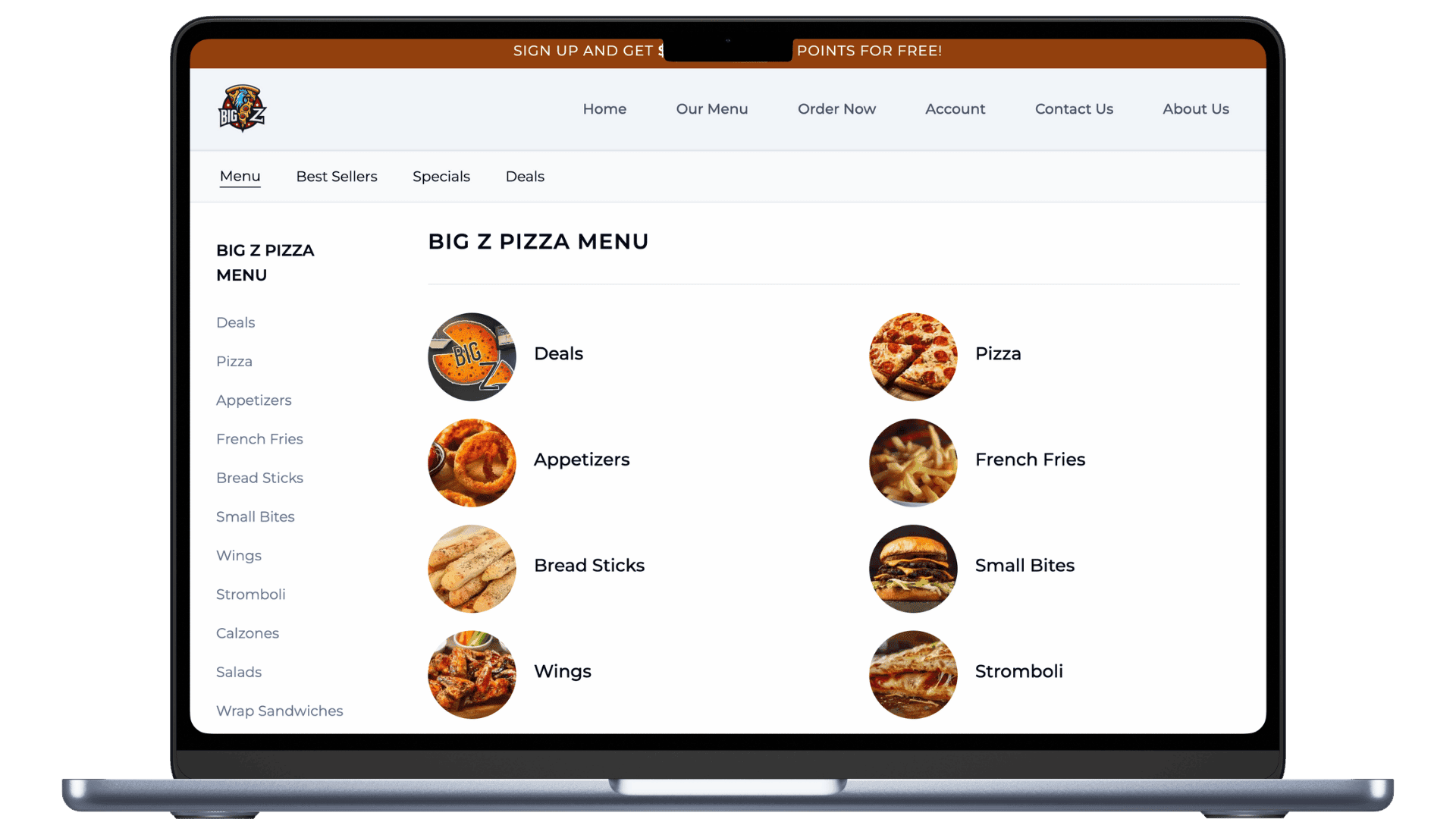
Modern online ordering system that makes it easy for customers to order from your restaurant
Frequently Asked Questions
What is an acceptable wait time in a restaurant?+
There is no universal number — a fast-casual lunch line and a Saturday-night steakhouse run on different clocks. Set targets by daypart and format from your own measurements, then hold to them. What guests actually punish is surprise: a blown quote or a silent, unexplained delay feels far worse than an honest wait of the same length.
Do waitlist systems actually reduce walkaways?+
Text-back waitlists remove the fear of losing your spot, so guests will wait longer and browse nearby instead of leaving. They also force more accurate quote times, because the system tracks how long tables really take. You get a useful side benefit: data on how many parties bail at each quoted wait, which tells you exactly what your door is costing you.
What tech tools help reduce wait times during busy service?+
The high-impact list is a text-back waitlist, handheld POS or pay-at-table readers, a kitchen display system, online ordering for takeout, and AI phone answering so calls stop pulling staff off the floor. Buy against your measured bottleneck, not the whole list. One tool aimed at your worst stage beats five aimed at nothing in particular.
How can I speed up ordering in my restaurant without hiring?+
Tighten the menu and mark your signatures so guests decide faster, script the first table touch, and move takeout orders to online ordering so they never enter the physical line. If phone orders are constant, let an AI phone host take them accurately in the background. Most ordering delay is process, not headcount.