Your best-selling sandwich and your most profitable sandwich are usually not the same item. Plenty of delis pour energy into a stacked signature that barely breaks even while a humble egg salad quietly funds the rent. This guide covers the math for figuring out which is which, the combinations that tend to earn the strongest margins, and how to build tickets — not just sandwiches — that make money.
First, the math: how to cost a sandwich
Food cost percentage is the share of a menu price that goes to ingredients: divide what the build costs you by what you charge, then multiply by 100. Every profitable menu decision starts with knowing this number for each sandwich you sell.
Take a classic turkey sandwich as a worked example — with made-up numbers, so swap in your own invoices. Say your build uses a quarter pound of roasted turkey at about $1.75, a roll at $0.60, two slices of Swiss at $0.40, lettuce, tomato, and onion around $0.35, condiments at $0.15, and paper and a bag at $0.15. That's roughly $3.40 in ingredients. Sell it at $10.95 and you're at about a 31 percent food cost.
Owners often look up how a turkey sandwich's ingredient cost compares to its retail price and are startled that the gap looks so wide. That gap is not profit. Out of the remaining $7.55 in the example come the labor to prep, slice, and build it, plus rent, utilities, insurance, card fees, and everything else that keeps the lights on. Ingredients are simply the one cost that scales with every single sandwich, which is why you track it item by item.
Two habits make the math useful instead of academic: cost every sandwich on the board, not just the favorites, and re-cost quarterly — or any week an invoice jumps, since deli meats, cheese, and eggs all move.
Combinations that tend to carry the best margins
The salad classics: egg, tuna, and chicken salad
The proteins are among the cheapest in the case, the mayo-based mix stretches them further, and the house-made halo lets you charge respectably. Egg salad in particular can be one of the strongest-margin items on a deli board — just re-cost it when egg prices swing. Upgrades cost pennies and read as premium: fresh dill, cracked pepper, a toasted croissant.
Grilled cheese, grown up
Bread and cheese are a low-cost base, and every premium addition — caramelized onions, tomato, bacon, hot honey — carries its own healthy markup. Pair it with a cup of tomato soup and you've built one of the best-margin combos in the business out of pantry staples.
The Italian combo
Mixed cold-cut builds let you balance pricier meats with affordable ones inside the same sandwich — a little capicola for the name, more ham and salami for the volume. House giardiniera or a signature dressing turns commodity ingredients into an item nobody can price-compare.
Roasted vegetable builds
Roasted peppers, marinated portobellos, or whatever is seasonal, with a good spread, cost little and hold a mid-range price with confidence. They also cover vegetarian demand without stocking a specialty ingredient that only serves one item.
Hot and pressed anything
Heat adds perceived value faster than ingredients do. The same build, pressed until the cheese melts, supports a noticeably higher price than it does cold — often for nothing more than a few seconds on the press.
Breakfast sandwiches
Egg-based builds carry strong margins and stretch your morning hours using the same bread, cheese, and bacon you already stock. If your deli opens early anyway, this is found money.
The real profit is in the attachments
Chips, drinks, cookies, and sides usually carry far better margins than the sandwich itself, and they raise the ticket with zero extra labor. Structure the menu so attaching them is the default. Back to the worked example: that $10.95 turkey sandwich left about $7.55 after ingredients. Say a bag of chips costs you $0.45 and sells for $1.75, and a fountain drink costs a quarter and sells for $2.50. Offer all three as a $13.95 combo — a small discount off ordering separately — and the ticket gains $3.00 of revenue on about $0.70 of added cost, roughly $2.30 of extra contribution per customer. The combo raised the ticket and the profit at the same time. Train the counter question to match: "Make it a combo?" beats "Anything else?" every shift.
Cross-utilization: one ingredient, many jobs
Every ingredient should earn its place in more than one item. Roast turkey works in the club, the melt, the chef salad, and the wrap. Giardiniera goes on the Italian and the spicy turkey. Bacon shows up at breakfast, on the BLT, and as a grilled cheese add-on. The payoffs stack: less waste because everything moves, simpler ordering, faster prep, and a shorter learning curve for new staff. When you consider adding a sandwich, ask what it needs that you don't already stock — the best new items need one new ingredient, not seven.
Name it, and price the signature with confidence
A "turkey sandwich" gets compared to every turkey sandwich in town, including the gas station's. Call it something like "The Lexington — house-roasted turkey, sharp cheddar, honey mustard, on bakery sourdough" and it gets compared to nothing, because it exists only at your shop. Signature builds with named house elements are where you take price. Put them at the top of the board, describe what makes them yours, and let the plain builds hold down the value end of the menu.
The quiet margin killers
- Portion creep. An extra ounce of turkey on every sandwich silently moves food cost by points, not pennies. Use scales or portion scoops until builds are muscle memory — then spot-check anyway.
- Cheese and condiment drift. Two slices means two. Squeeze bottles and portion cups keep "a little extra" from becoming the de facto recipe.
- Bread waste. Track what you throw away; day-old bread can become croutons, a panzanella special, or French toast if you serve breakfast.
- Unrecorded comps. Staff meals and fixed mistakes are fine — invisible ones wreck your numbers and hide real problems.
Track the mix, not just the total
Overall food cost tells you something is wrong; item-level tracking tells you what. Once you know each sandwich's margin and its weekly sales count, the decisions get obvious: feature the items that are high-margin and high-volume, rework or re-price the popular ones with weak margins, and cut the slow movers that earn nothing. Online orders make this easier because every ticket is recorded cleanly — one reason a well-managed online menu pays off beyond convenience. And if those orders come through your own site instead of a commission app, the data and the margin both stay yours — here's how to get more direct orders without paying for the same customer twice.
Profitable combinations aren't a secret list — they're whatever your own numbers say they are. Cost the board, watch the mix, and pair those findings with what's trending on deli menus right now so the items you promote are the ones that pay you back.
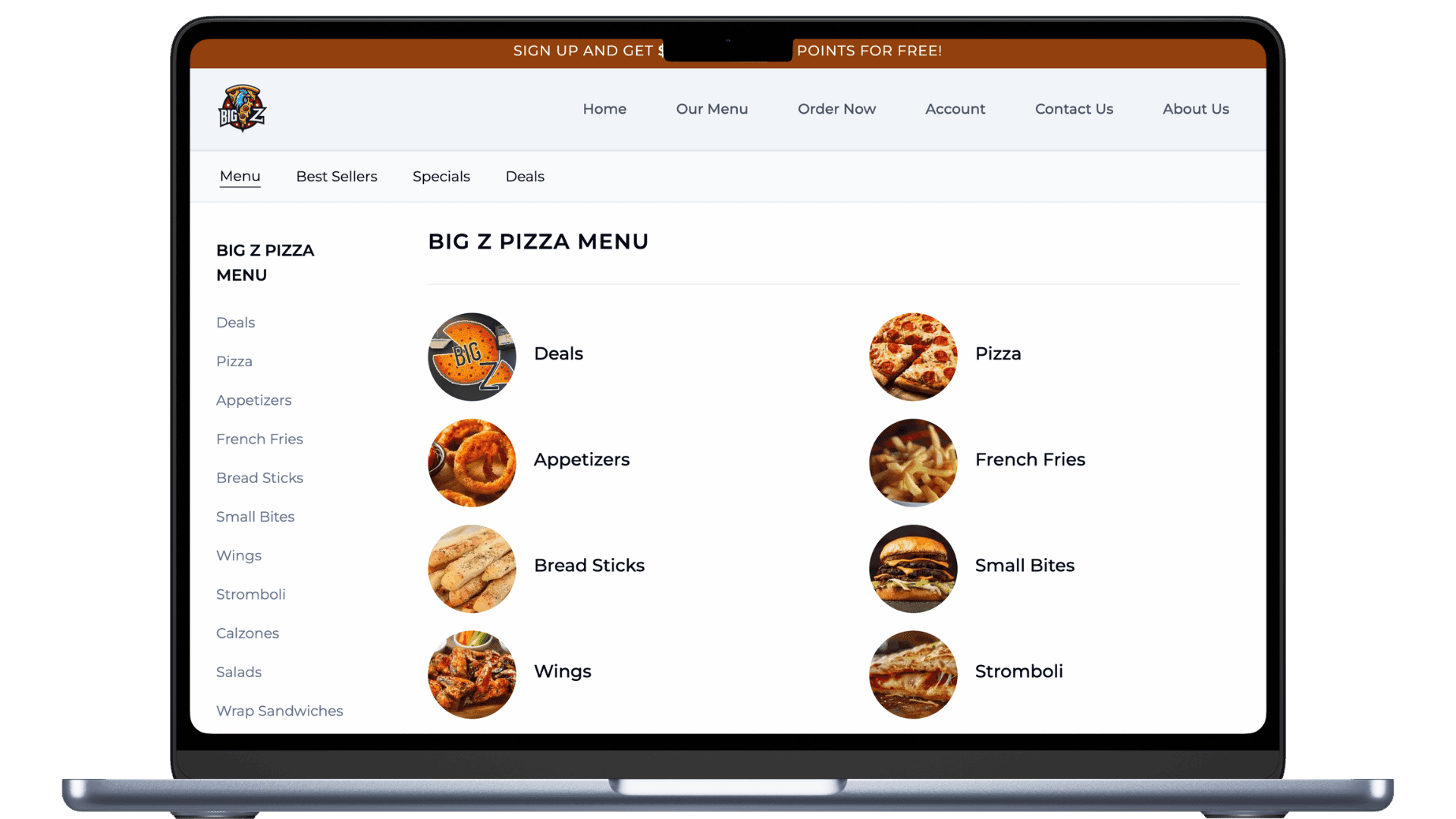
Modern online ordering system that makes it easy for customers to order from your restaurant
Frequently Asked Questions
Which deli sandwiches make the most profit?+
In most shops the strongest margins come from egg, tuna, and chicken salad builds, grilled cheese variations, roasted vegetable sandwiches, and hot pressed items, because the base ingredients are cheap while heat and house-made touches add perceived value. The honest answer, though, comes from costing your own menu — invoices and prices vary too much to trust anyone else's list.
How do I figure out the food cost of a sandwich?+
Add up the invoice cost of every component — protein, bread, cheese, produce, condiments, and packaging — then divide by the menu price and multiply by 100. If the ingredients run $3.40 and you charge $10.95, you're at about 31 percent. Re-cost quarterly, or any week a key invoice jumps.
What food cost percentage should a deli target?+
There's no single right number — it depends on your rent, labor, and volume. A common rule of thumb is keeping sandwich ingredients somewhere around a third of the menu price, but the more useful discipline is knowing each item's number and watching the trend line. Dollars pay the bills, not percentages.
Do combo deals actually increase profit?+
Yes, when the attachments carry better margins than the sandwich — and chips, drinks, and cookies usually do. A combo that trims a little off the bundle price but reliably attaches two high-margin items raises both the ticket and the total profit per customer. Run the math on your own costs before you print the board.